Mould on interior walls in autumn: practical guide
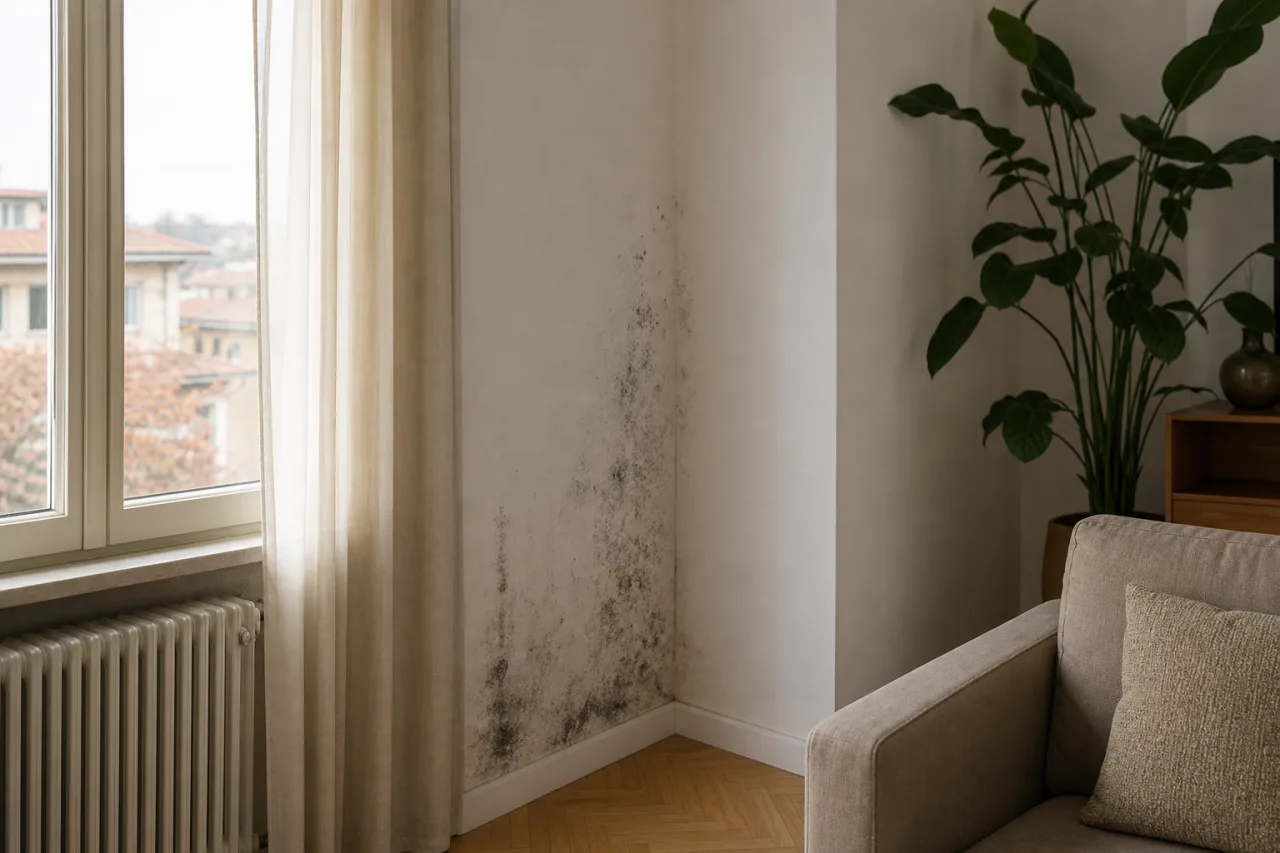
Mould on interior walls in autumn should be inspected before you cover it up: it can be caused by condensation, water infiltrations or a hidden leak. In Rome, with many older buildings and sharp temperature swings, it’s worth finding the root cause. If stains reappear after cleaning, consider a repainting service in Rome with a targeted treatment.
Mould on interior walls: first checks to make
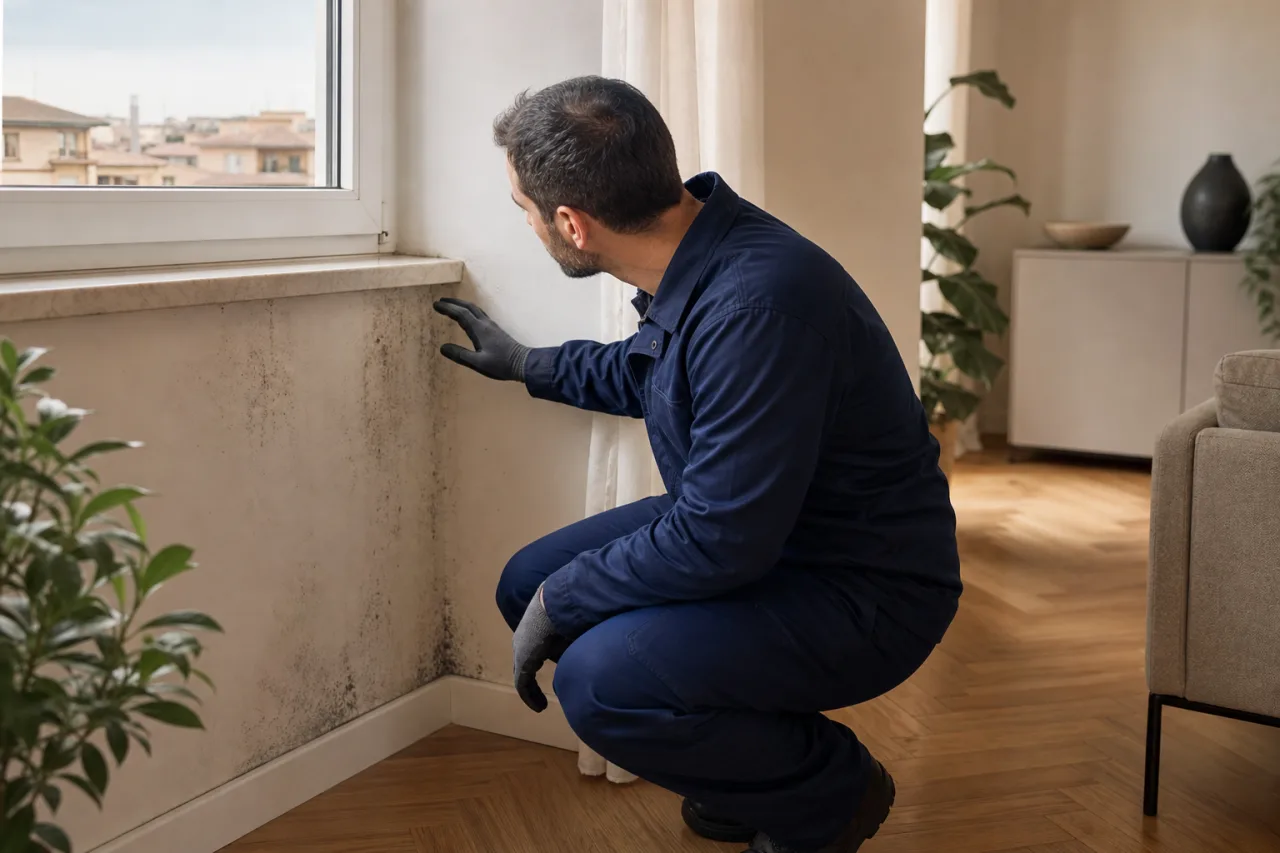
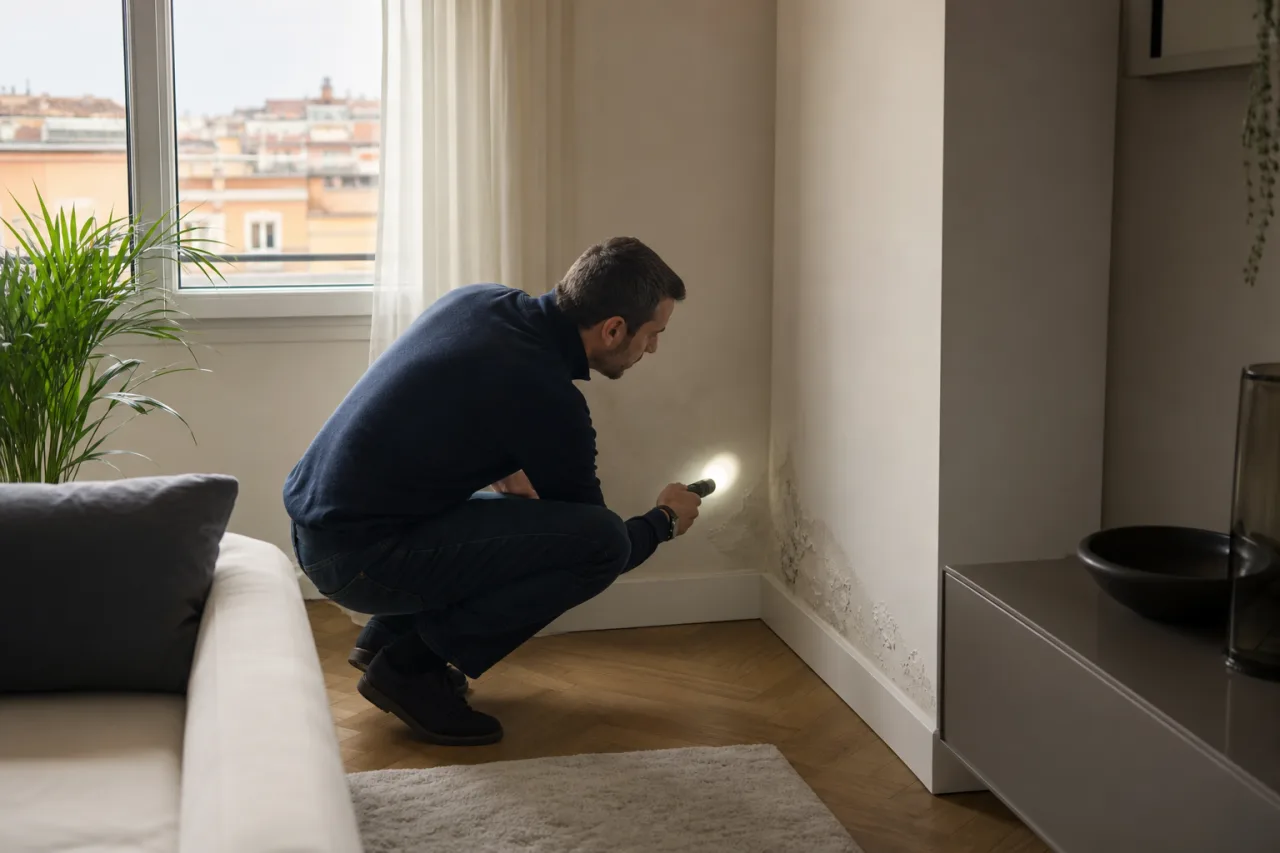
Before using strong chemicals, note exactly where the black spots appear on the wall. Cold corners, areas behind wardrobes and near windows usually point to condensation. A single isolated stain can indicate an infiltration.
- Check whether the wall feels cold or damp to the touch.
- Smell for mustiness and assess the room’s ventilation.
- Move furniture a few centimetres away from external walls.
- Photograph the stain: it helps track whether it grows.
Condensation, infiltration or leak: how to tell them apart
Condensation often shows up in multiple spots and gets worse after showers, cooking or drying clothes indoors. Infiltrations usually follow rain, terraces, balconies or exposed façades. If you see swelling, crumbling plaster or water seeping through a wall near a bathroom or kitchen, a technical inspection is needed.
In these cases you can book a plumber in Rome to check pipes and drains. If the stain starts from the ceiling, our guide on damp spots on the ceiling may also help.
Cleaning mould on walls: when it may be enough
Cleaning mould on walls can be enough if the stain is small, superficial and doesn’t return after a few days of proper airing. Protect hands and eyes, don’t dry-scrape, and ventilate well during treatment.
If the room is heavily used or you want a stress-free deep clean, you can request domestic cleaning in Rome, especially useful after moving furniture and soft furnishings away from the area.
Damp walls: what to do and when to repaint
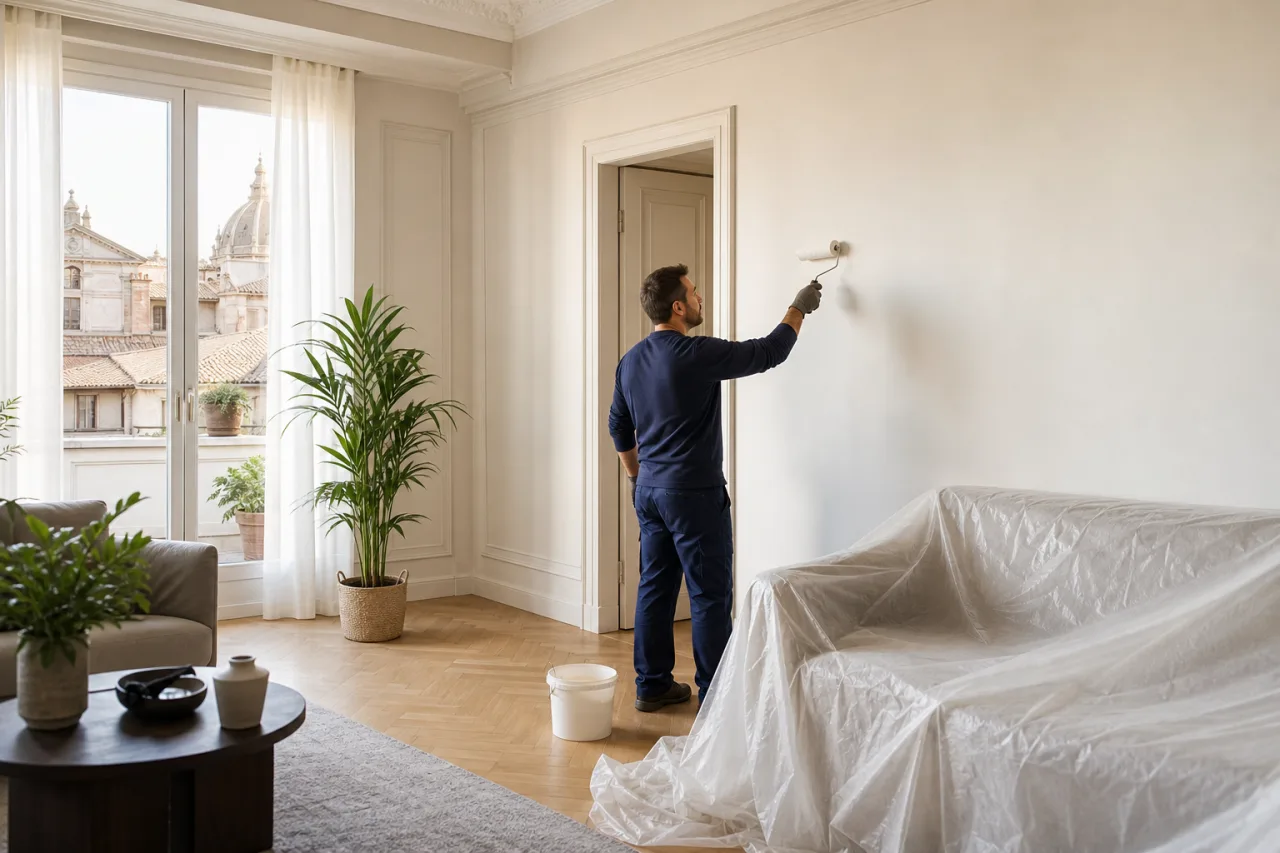
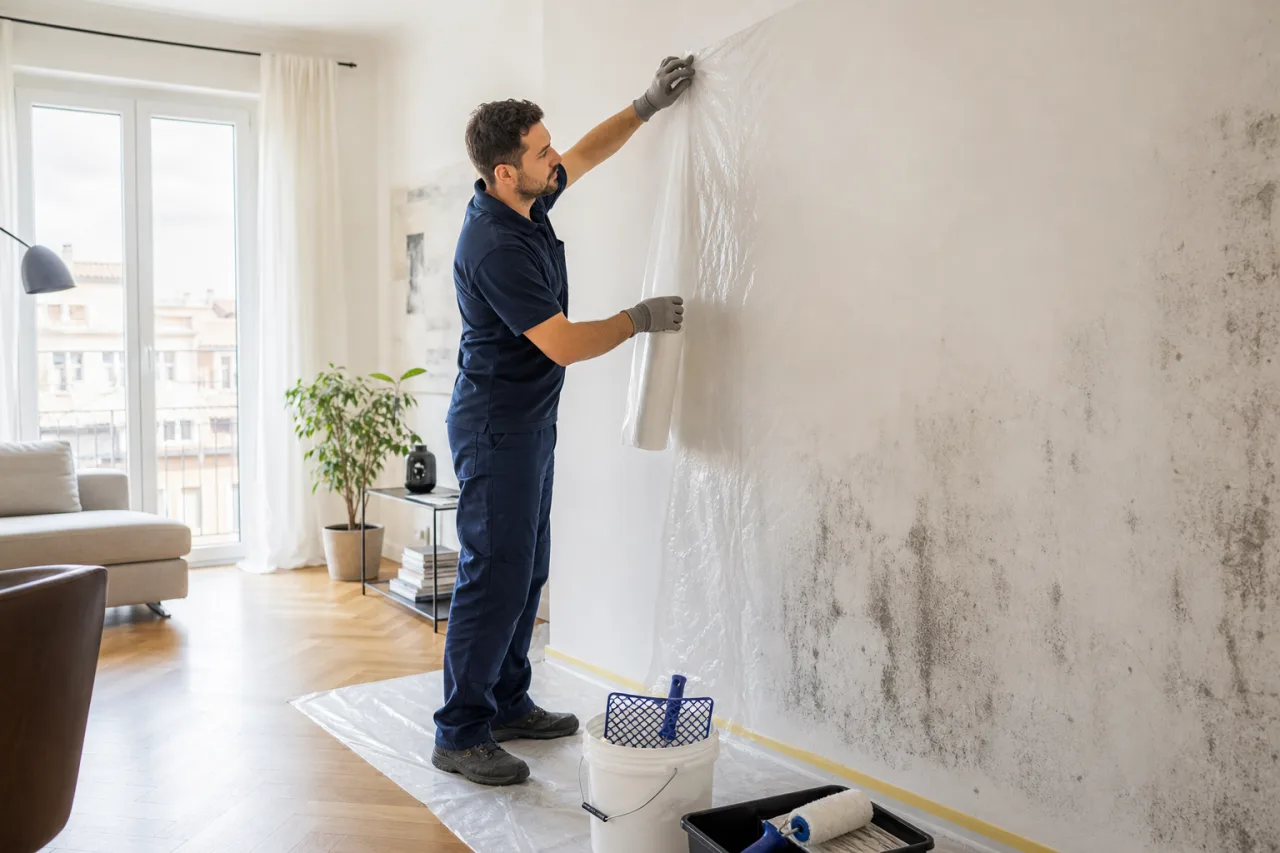
If you’re wondering what to do about damp walls, always start with the cause. Repainting over a still-damp wall only hides the problem for a short time. After checks, anti-mould repainting makes sense when the substrate is dry, clean and properly prepared.
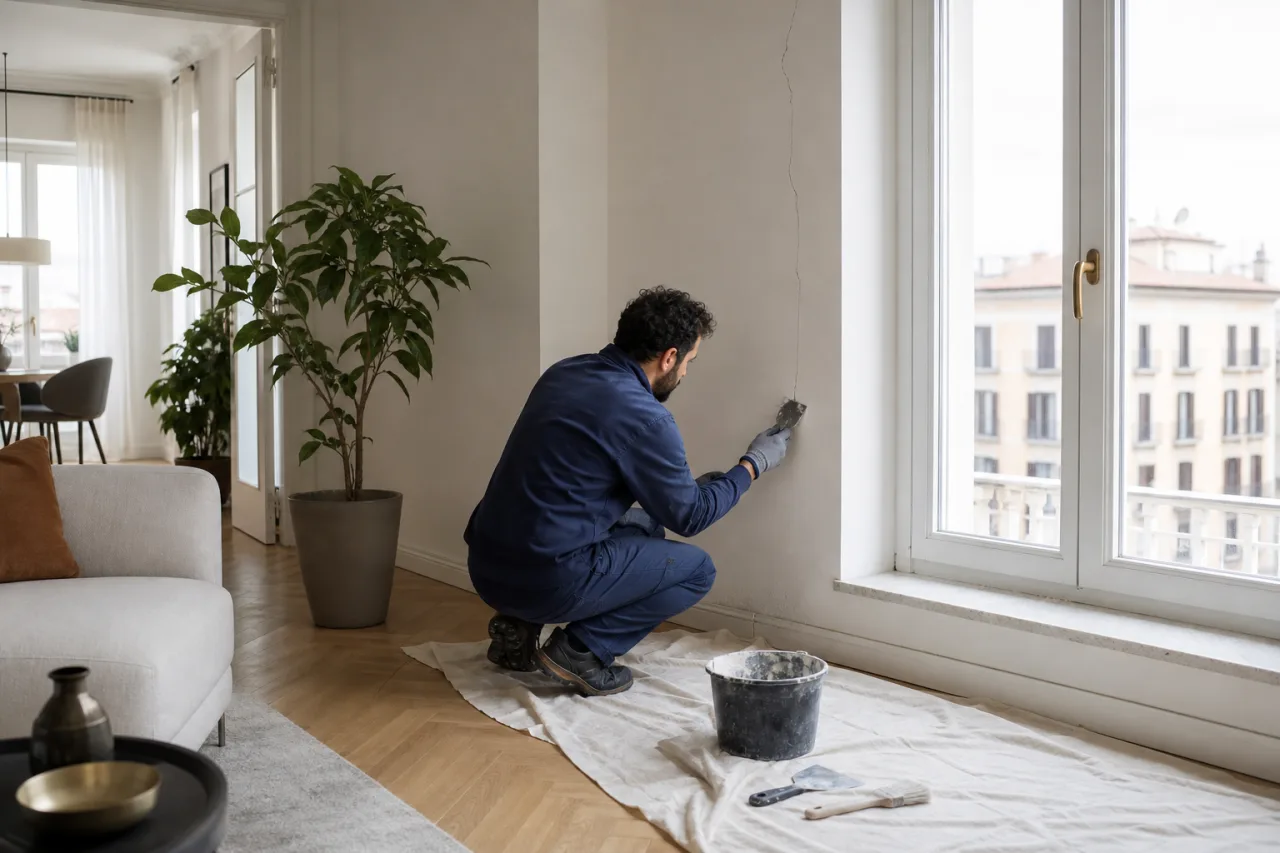
For touch-ups, filling cracks, or localised anti-mould treatment, choose a wall repair service. It’s appropriate when paint is flaking, plaster is damaged or mould has left persistent stains.
Frequently asked questions
How can I tell if mould is just condensation?
Condensation usually appears on cold walls, in corners, on window frames and in poorly ventilated areas. It improves with airing, reducing indoor steam and moving furniture away. If the stain grows even in dry weather, have the wall inspected.
Can I repaint immediately over mould?
Better not. Mould should be removed first and the humidity source identified. If the wall remains damp, even a good anti-mould paint may not last. You need a dry, properly prepared surface.
When should I call a plumber about mould?
Call a plumber if the stain is near pipes, the bathroom, the kitchen or radiators, or if the wall is wet, swollen or losing plaster. Any sudden localised increase in dampness also deserves a check.
Book the right professional in Rome from the Cura24h app: download it from the App Store or Google Play and choose cleaning, repainting or plumbing. App Store · Google Play
Painting
Wall painting, wall repairs and wallpaper removal for homes and offices.